
In the classroom
Student Workshops
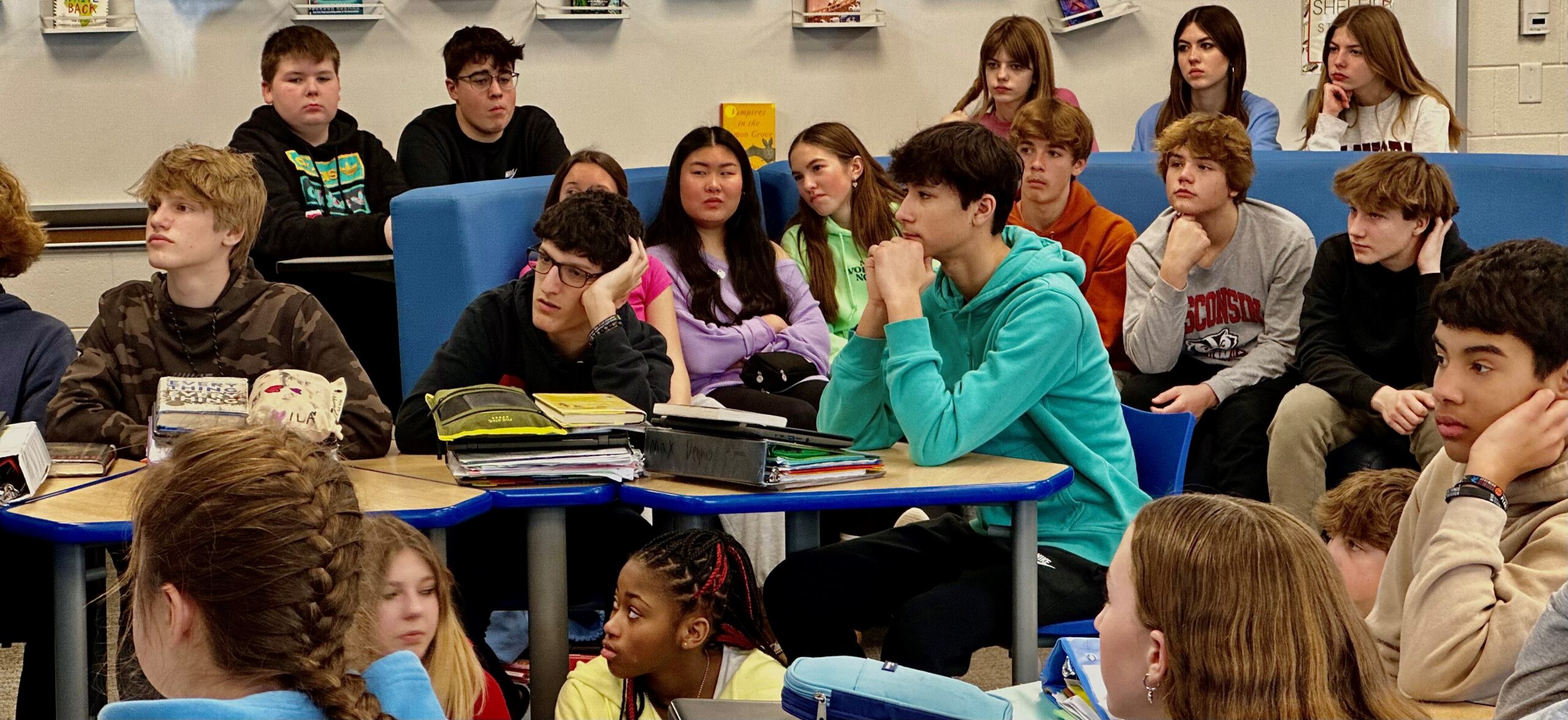
HERC brings Holocaust education directly to Wisconsin classrooms through in-person and virtual workshops led by expert educators and Speakers Bureau members. Our programs provide essential historical context, survivor testimony, and meaningful discussions that deepen students’ understanding of the Holocaust and its contemporary relevance.
The Four Domains
Each of these four domain programs are 45-minute interactive workshops on different aspects of the Holocaust. Appropriate for either middle or high school and worked best in combination with HERC’s Holocaust Education Map.
Intolerance
Discover antisemitism’s roots and examine its horrifying consequences
Nazi Germany
Explore the rise of the Third Reich and their sinister political agenda
The Holocaust
Bear witness to one of the worst events in history and the resilience of those who survived
Responsibility
Examine the roles of people during the Holocaust and tease out lessons about life today
9th grade and up
Can Words Kill? Investigating Nazi Propaganda
“Propaganda,” Adolf Hitler wrote in 1924, “is a truly terrible weapon in the hands of an expert.” During the subsequent two decades, Nazi leaders showed the world bold, new ways to use it.
In this 1-hour conversation-style lecture, participants will go through the origins of Nazi propaganda, exploring how the Nazis made use of sophisticated technologies of their time to influence public opinion in Germany’s young democracy after World War I. Together we will reflect on how Nazi propaganda led to mass murder and genocide during the Holocaust, and what lessons we can apply to today’s world.
8th grade and up
The 1994 Genocide in Rwanda
What led to the 1994 genocide in Rwanda? During this 1-hour conversation-style lecture, participants will learn about the origins of the Hutu, Tutsi, and Twa and the effect of colonization. Together we will examine the escalation of animosity and violence between the groups, the use of media in the incitement of violence, and the path to justice and reconciliation in the aftermath.